Finished fabric buyer guide
What Is Scuba Knit Fabric? A Buyer Guide
Scuba knit fabric is a structured, often smooth double knit used for apparel that needs body, cushioning, shape, and a modern clean surface. It is a textile fabric and should not be confused automatically with foam-backed neoprene. Air-layer is a related commercial category, while true spacer fabric requires a verified three-dimensional connecting structure. Buyers should confirm the exact article on a finished sample.
Updated 2026-07-17 · Reviewed by O'range Textile Finished Fabric Team
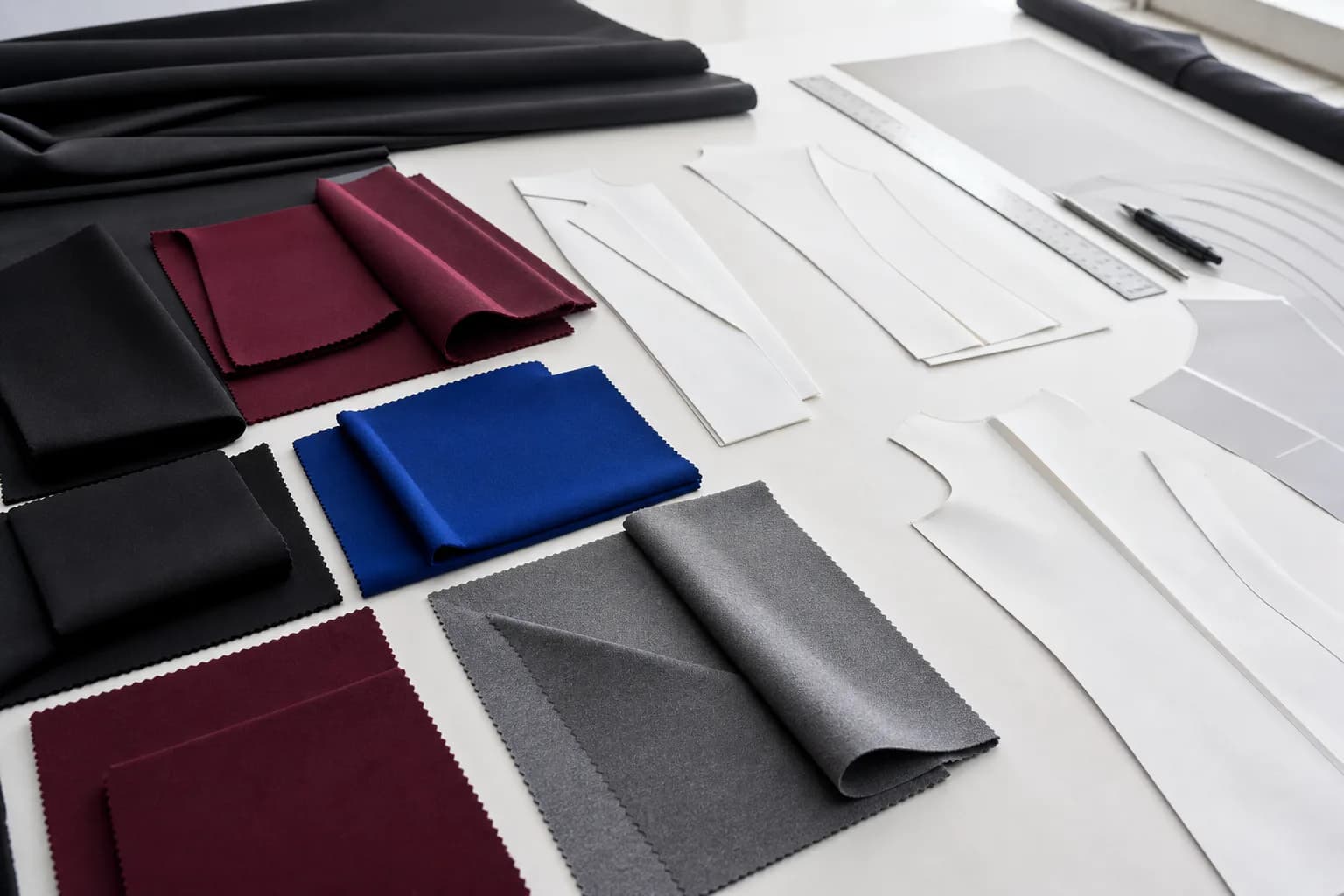
Scuba knit is a textile double knit, not automatic neoprene
Apparel scuba knit typically uses a dense knitted structure to create a smooth surface and cushioned body. It may support clean silhouettes, resist some edge curl, and feel more substantial than jersey.
Neoprene usually refers to a synthetic rubber foam system, while scuba knit can be an entirely textile construction. Air-layer fabrics may create volume between surfaces, but the phrase does not prove a true spacer architecture. Use each term only after construction review.
Scuba knit, air-layer, spacer and neoprene
These terms overlap in marketing but describe different technical possibilities. Scuba-style fabric points to smooth structured knit body; air-layer points to volume between knitted surfaces; spacer points to a verified three-dimensional structure; neoprene points to foam-based material.
The buyer should ask for the construction description and inspect the cut edge. If breathability, compression, insulation or technical spacing is critical, a commercial name is insufficient and a test plan is needed.
| Term | Useful working meaning | Do not assume |
|---|---|---|
| Scuba knit | Smooth structured textile double knit | Foam or fixed thickness |
| Air-layer | Cushioned double-knit family | True 3D spacer architecture |
| Spacer fabric | Verified separated layers with connectors | Same behavior as ordinary air-layer |
| Neoprene | Foam-based material family | Same fibre or care as textile knit |
Match structure to silhouette and heat management
Scuba-style and air-layer fabrics may suit hoodies, jackets, dresses, skirts, structured trousers, sports-inspired casualwear, loungewear, bags or panels.
A dramatic silhouette may benefit from body, but the same thickness can increase seam bulk and thermal load. Evaluate comfort, movement, pressing and needle response in the final garment environment.
- Structured hoodies and jackets
- Modern dresses and skirts
- Sports-inspired casualwear
- Travel and lounge sets
- Shape-holding panels and accessories
Describe the structure and thickness you actually need
Record whether scuba-style, air-layer or true spacer is required, then add composition, GSM, usable width, thickness, face, reverse, compression, resilience, stretch, color and finish. Do not collapse these fields into a single adjective such as premium, soft, heavy, or stretchy. The supplier and buyer need the same written target and the same labeled physical reference.
If thickness or insulation matters, define how it will be measured. If appearance is the priority, state the silhouette and surface target without implying unsupported technical performance. If a requirement is not yet known, mark it as a proposal field instead of leaving it implicit. That allows the supplier to explain the trade-off and prevents an exploratory sample from being mistaken for final approval.
| Specification field | Why it matters | Approval evidence |
|---|---|---|
| Construction | Separates scuba-style, air-layer, spacer and foam-backed materials | Labeled sample and article sheet |
| Composition | Defines fibre identity, not complete behavior | Written supplier declaration and buyer-required verification |
| GSM and usable width | Affects body, consumption and pattern planning | Agreed method and approved specification |
| Surface and finish | Defines smoothness, brushing, face, reverse and marking sensitivity | Face/reverse review and approved swatch |
| Performance | Covers compression, resilience, heat, seam bulk, stretch and care | Garment trial and applicable test plan |
Inspect the cut edge and sewing behavior
The edge helps reveal whether the sample is a compact knit, an air-layer structure, a spacer or another composite. Inspect both faces and compress several areas to compare resilience.
Use the intended needle, seam and pressing route on a representative panel. Monitor skipped stitches, seam ridge, feed, marking, melting risk, recovery and the comfort of bulky intersections.
- 01Label the submission with supplier, article, color, date and version.
- 02Inspect cut edge, faces, thickness, compression, resilience, GSM, width, stretch, surface and color.
- 03Record measurements and visible observations against the brief.
- 04Run needle, seam, pressing, decoration, movement, thermal and care-development checks on the exact submitted article.
- 05Approve one dated sample and list unresolved tests or commercial terms.
Connect the learning page to a finished-fabric RFQ
O'range Textile's supplied catalogue describes 104 finished-fabric records across 11 series, including 21 air-layer and 14 yarn-dyed wool-blend air-layer records. The parent company's supplied machine record describes 200+ circular knitting machines across double-knit and rib configurations and lists air-layer among its documented entries. These records provide context for development review, but they do not replace article-specific data.
Send the intended garment, construction, composition, target GSM, usable width, color, finish, quantity, destination, sample deadline and testing requirements. State which of the four terms is technically required and why. Confirm availability, MOQ, lead time, packing, testing, payment and shipping through the current quotation.
- Name the garment and panel where the fabric will be used.
- Separate fixed requirements from supplier proposal fields.
- Request a labeled finished-fabric sample and matching data sheet.
- State buyer, market and destination requirements before quotation.
- Link final approval to one sample version and written specification.
Evidence boundary
The supplied catalogue supports a finished-fabric range and documents 104 product records across multiple series. Construction names, composition, GSM, usable width, finish, color, testing status, lead time, and commercial terms still have to be confirmed for the exact offered article and order.
Buyer questions
Frequently asked questions
Is scuba knit the same as neoprene?
No. Scuba knit is generally a textile double knit, while neoprene commonly refers to synthetic rubber foam material. Confirm the exact construction.
Is air-layer fabric a spacer fabric?
Not automatically. True spacer fabric has a verified three-dimensional connecting structure. Air-layer may describe other cushioned double knits.
What garments use scuba knit?
Applications include structured hoodies, jackets, dresses, skirts, sports-inspired garments, travel sets and shape-holding panels, subject to sample approval.
Does scuba knit breathe?
Breathability varies with fibre, density, thickness and finishing. Do not infer a performance level from the name; request relevant data or testing.
What should buyers check on a scuba sample?
Check structure, cut edge, composition, GSM, width, thickness, face, reverse, compression, resilience, stretch, seam, pressing, heat and care behavior.
Move from category research to a sample brief
Share the garment use, construction direction, composition, target GSM, usable width, color, finish and tests that matter. The team can then confirm the appropriate article and quotation route.