Finished fabric sourcing route
Wool Blend Knit Fabric for Warm Apparel
Wool-blend knit fabric combines wool with other fibres to balance warmth, hand, structure, durability, price, or care requirements. The supplied catalogue includes acrylic-wool, yarn-dyed wool-blend air-layer, lyocell-acetate-wool style, acetate-blend brushed, and cashmere-feel series. Fibre names must follow the exact composition: a soft brushed synthetic blend should not be sold as cashmere.
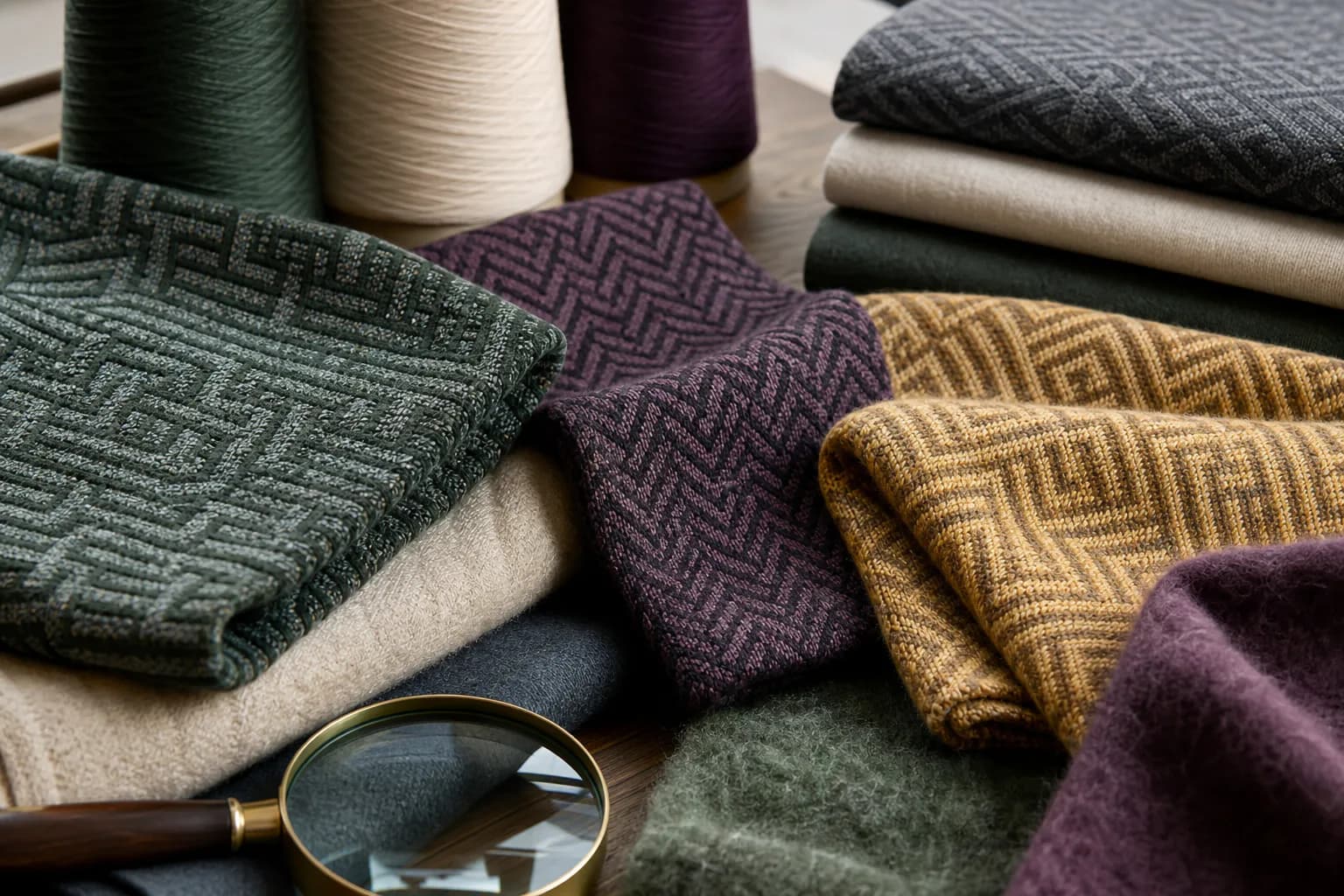
Separate fibre identity from a cashmere-like hand
A wool blend contains a declared wool percentage combined with fibres such as acrylic, polyester, viscose, nylon, lyocell, or acetate. A cashmere-feel or faux-cashmere finish describes tactile direction, not fibre identity.
For sourcing, the category name is only the starting point. Buyers should record the exact construction, fibre composition, target GSM, usable width, surface or brushing treatment, color reference, stretch direction, recovery expectation, and intended garment. Use wool blend only where wool appears in the composition, use lyocell rather than a trademarked fibre name without documentation, and use cashmere-feel for articles whose softness comes from blend and finishing rather than cashmere fibre.
Documented range and manufacturing fit
O'range Textile's supplied workbook contains 104 finished-fabric records across 11 series, with documented entries spanning approximately 210-510 GSM and 133-185 cm usable width. These are catalogue-level ranges, not a promise that every wool-blend knit fabric article covers every value. The parent company's supplied machine record documents 200+ circular knitting machines across double-knit and rib configurations.
O'range Textile's supplied range combines double-knit structure with yarn-dyed, brushed, acetate-style, lyocell-blend and wool-blend directions for autumn and winter apparel development. The parent company's machine record provides context for development review rather than an order specification. A buyer should request the current article sheet, a labeled cutting, and a quotation for the precise construction under review.
| Buyer field | What this page establishes | What the quotation must confirm |
|---|---|---|
| Product family | Finished wool-blend and cashmere-feel knit fabrics | Exact construction and article code |
| Catalogue evidence | 14 yarn-dyed wool-blend air-layer, 13 acrylic-wool, 11 lyocell-acetate-wool blend and related records | Current availability and sample version |
| Weight and width | Documented catalogue spans 210-510 GSM and 133-185 cm | Article-specific GSM and usable width |
| Finish | Heathered, brushed, smooth, cashmere-feel or order-specific surface | Face, reverse, brushing, hand and color |
| Compliance | Buyer requirements can be included in the inquiry | Applicable test method, report and acceptance rule |
Match wool-blend structure to climate and care
Wool-blend knits may be considered for jackets, dresses, trousers, skirts, cardigans, warm tops, overshirts, coats or winter layering when the approved article matches the garment. The correct choice depends on silhouette, climate, layering, seam construction, care route, and the amount of body or recovery the designer needs. A visual match is not enough: sample the fabric in the intended garment or panel.
Balance warmth and softness with abrasion, pilling, color, seam, lining, pressing, care label, and target price. A softer first touch does not automatically predict better long-term performance. Compare candidate swatches under the same light and condition, then document why one version was selected. This creates a usable approval trail for the sourcing, development, quality, and production teams.
- Warm structured dresses and skirts
- Jackets, overshirts and outer layers
- Cardigans and winter tops
- Trousers and coordinated sets
- Brushed fashion pieces needing a soft hand
How to evaluate a wool-blend knit fabric sample
Start with identity. Match the sample label to the article code and supplier sheet, then check the face, reverse, edge, color, width presentation, and several positions across the cutting. For wool-blend knit fabric, pay particular attention to exact fibre declaration, shade, brushing direction, hairiness, pilling, abrasion, shrinkage, seam appearance, pressing, and care response.
Next move from the loose swatch to the buyer's real process. Cut and sew a representative panel, apply the planned decoration if relevant, and review the agreed care-development result. Record measurements and observations by sample version instead of approving a fabric through an untracked message.
- 01Issue a brief that separates fixed requirements from fields the supplier may propose.
- 02Receive a labeled finished-fabric cutting and the matching specification data.
- 03Inspect composition document, face direction, brushing, hairiness, GSM, width, pilling risk, seam and care result.
- 04Run garment, sewing, decoration, and care checks relevant to the program.
- 05Approve one dated version and list any tests or commercial fields still open.
Prepare a commercial RFQ for wool-blend knit fabric
A useful RFQ connects the technical choice to the order. Send the garment application, target composition, construction, GSM, usable width, color or lab-dip reference, finish, quantity, color split, destination, sample deadline, and required documentation. Include a reference swatch or image only as context and state which properties must be matched.
Ask for an exact composition statement and do not approve marketing names that imply cashmere or branded lyocell without the corresponding fibre evidence. MOQ, lead time, color availability, testing, packing, and payment terms are order-specific and should come from the current quotation. The website must not replace that transaction record.
- Exact application and garment panel
- Composition, construction, GSM and usable width
- Surface, brushing, hand feel, stretch and recovery
- Color reference, quantity, color split and destination
- Sample date, testing needs, packing and commercial deadline
Evidence boundary
The supplied catalogue supports a finished-fabric range and documents 104 product records across multiple series. Construction names, composition, GSM, usable width, finish, color, testing status, lead time, and commercial terms still have to be confirmed for the exact offered article and order.
Buyer questions
Frequently asked questions
Is cashmere-feel fabric real cashmere?
Not necessarily. Cashmere-feel describes a soft tactile direction. The product may be a synthetic, viscose, acrylic, wool or other blend. Only the written composition can establish fibre content.
How should buyers compare wool-blend knit samples?
Compare exact composition, GSM, width, surface, brushing, hairiness, pilling or abrasion plan, drape, warmth, seam response, pressing, care development, price, and approved color.
Can buyers request a wool-blend knit fabric sample?
Yes. Buyers can request a finished-fabric sample for evaluation. The request should identify the target construction, composition, GSM, usable width, color, finish, quantity, application, and destination so the supplier can confirm a relevant article.
What should be confirmed before ordering wool-blend knit fabric?
Confirm the article code, exact construction, composition, GSM, usable width, face and reverse, color, finish, stretch or recovery requirements, testing, approved sample, quantity, lead time, packing, and commercial terms in writing.
Move from category research to a sample brief
Share the garment use, construction direction, composition, target GSM, usable width, color, finish and tests that matter. The team can then confirm the appropriate article and quotation route.