104 articles across 11 finished-fabric series
Double Knit Fabric Manufacturer for Apparel Brands
Review air-layer, yarn-dyed wool-blend air-layer, structured polyester-viscose, faux-cashmere, acrylic-wool, lyocell-acetate-wool, brushed, raised-pile, cashmere-blend and jacquard directions. Representative articles show composition, GSM and usable width from the supplied catalogue.
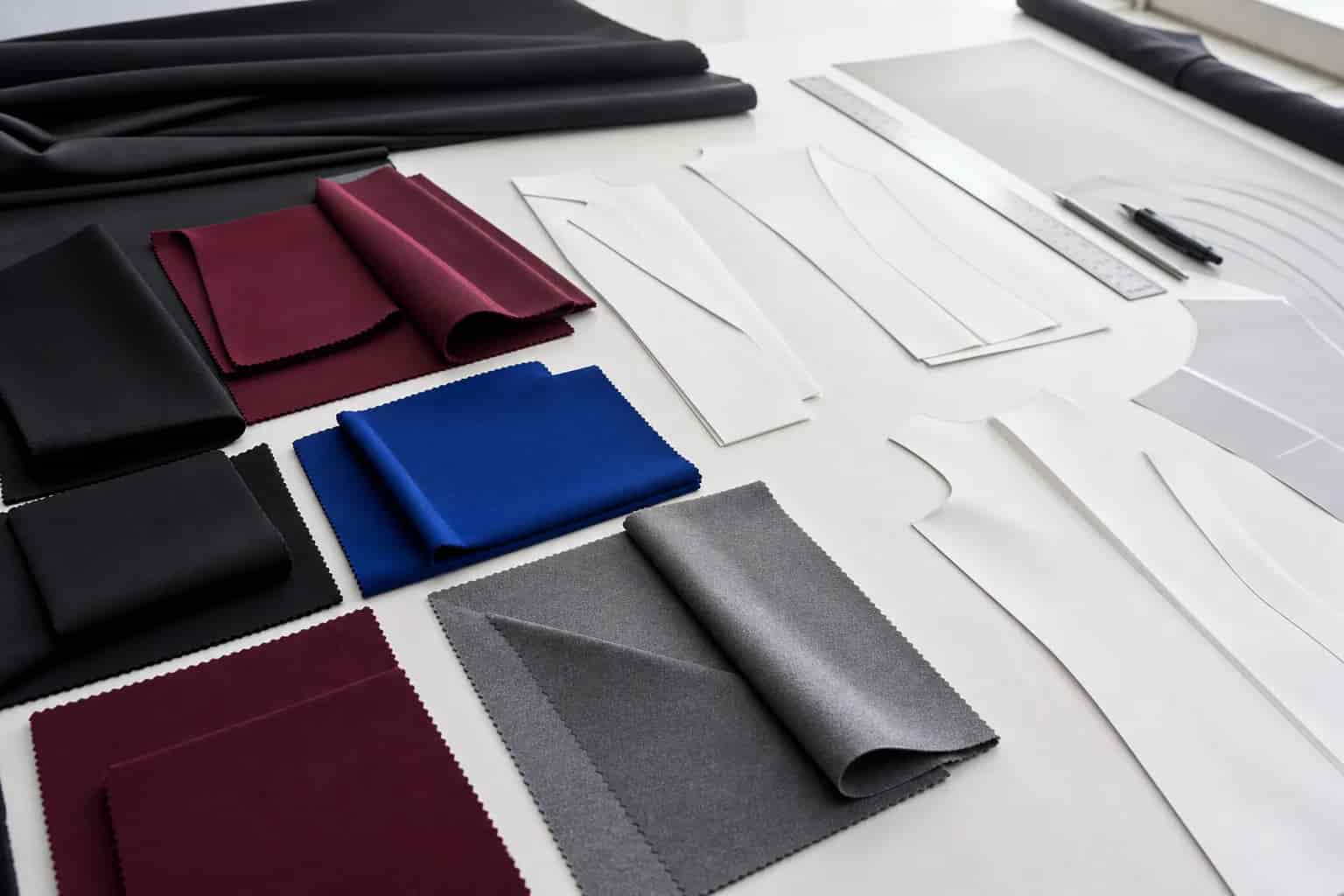
- Product range
- 11documented finished-fabric series
- Catalogue evidence
- 104supplied finished-fabric records
- Parent-company machine record
- Double-knit and rib configurations
- Decision
- Article confirmed by sample and specification
A finished-fabric range built around double-knit structure
The commercial range starts after knitting: dyed, finished, brushed, patterned, yarn-dyed or otherwise prepared fabrics intended for apparel sampling and production. This distinction matters because buyers evaluate hand, surface, color, usable width, GSM, stretch, recovery and garment behavior on the finished state.
The supplied workbook contains 104 product records across 11 documented finished-fabric series: air-layer, yarn-dyed wool-blend air-layer, structured polyester-viscose, faux-cashmere, acrylic-wool, lyocell-acetate-wool composite, acetate brushed, lyocell-acetate-wool texture, raised-pile, cashmere-blend and jacquard. The examples below preserve the article-level composition, usable width and GSM from that workbook.
| Series | Representative article | Documented composition | Usable width | Weight |
|---|---|---|---|---|
| Air-layer | GD2515 | 45% polyester, 25% combed cotton, 24% modal, 6% elastane | 160 cm | 300 GSM |
| Yarn-dyed wool-blend air-layer | GD2672 | 67.6% polyester, 13.6% viscose, 7.7% nylon, 5.3% acrylic, 4.1% elastane, 1.7% wool | 160 cm | 360 GSM |
| Structured polyester-viscose | 6128 | 85% polyester, 12% viscose, 3% elastane | 160 cm | 420 GSM |
| Faux-cashmere | GD2502 | 27.7% polyester, 20.7% nylon, 48.5% viscose, 3.1% elastane | 155-160 cm | 280 GSM |
| Acrylic-wool | 2552 | 47.8% polyester, 26.3% viscose, 13.3% nylon, 9.1% acrylic, 3.5% wool | 170-175 cm | 240 GSM |
| Lyocell-acetate-wool composite | GD2712 | 86.7% polyester, 6.9% viscose, 4.4% lyocell, 1% wool, 1% acetate | 165 cm | 250-260 GSM |
| Cashmere blend | GD2590 | 77.3% polyester, 5.7% lyocell, 13.6% viscose, 3.4% cashmere | Confirm by inquiry | 240 GSM |
| Wool-blend jacquard | GD2579 | 51.8% polyester, 23.9% viscose, 12.1% nylon, 8.2% acrylic, 4% wool | 160-165 cm | 240 GSM |
Manufacturing evidence without overclaiming
The parent company's supplied machine record documents 60+ double-knit/84-feed machines, 40+ rib/72-feed machines, and 100+ double-knit/72-feed machines across 17 configurations. Roma fabric, air-layer, flat double knit, double-sided fabrics and rib are listed in the record.
This parent-company record provides context for development review; it does not prove an individual fabric's composition, performance or availability. Each page therefore separates factory-level evidence from article-level fields that must be confirmed in the quotation and approved sample.
- Parent-company record: 60+ documented 84-feed and 100+ documented 72-feed double-knit machines
- Parent-company record: 40+ documented rib machines
- Parent-company record: 200+ circular knitting machines in total
- 104 finished-fabric records in the supplied workbook
- Documented catalogue span of about 210-510 GSM and 133-185 cm usable width
Use a hub-and-spoke route for sourcing
Start at this hub when the garment needs a finished double knit but the exact subtype is open. Move to a product page when the decision becomes structural, and use the buyer guide when the team needs a definition, comparison, specification, or sample checklist.
Every route returns to a sample request. That internal-link structure helps buyers and search systems understand the relationship between the category, product family, evidence, educational question, and commercial action.
- 01Define garment, silhouette and panel function.
- 02Choose the most likely construction family.
- 03State fixed fields and supplier proposal fields.
- 04Request labeled finished-fabric samples and matching data.
- 05Run garment and care checks, then approve one documented version.
Specifications that belong in every finished-fabric inquiry
A professional brief names construction and composition separately, then adds GSM, usable width, surface, finish, color, stretch direction, recovery, application, quantity, destination and testing needs. Where the buyer has a reference, identify which property matters rather than asking for an undefined copy.
MOQ, lead time, color feasibility, testing, packing and payment are commercial fields. They may change by article, quantity and date, so they should remain in the current quotation rather than fixed in evergreen marketing copy.
- Construction and exact composition
- Target GSM and usable width
- Face, reverse, brushing, hand and color
- Stretch, recovery, thickness and garment use
- Quantity, color split, destination and sample deadline
- Testing, packing and documentation requirements
Terminology safeguards for international buyers
Use lyocell unless branded fibre documentation supports a trademarked name. Use cashmere-feel or faux cashmere when the hand is similar but the composition does not contain cashmere. Use air-layer or scuba-style double knit until a true spacer structure has been verified.
These distinctions reduce quotation errors and make the content more useful to AI search systems because claims remain bounded by evidence. Accurate vocabulary is a conversion tool: it helps the buyer request the right article and helps the supplier explain a legitimate alternative.
Evidence boundary
The supplied catalogue supports a finished-fabric range and documents 104 product records across multiple series. Construction names, composition, GSM, usable width, finish, color, testing status, lead time, and commercial terms still have to be confirmed for the exact offered article and order.
Buyer questions
Frequently asked questions
Does O'range Textile supply finished double knit fabric?
Yes. The supplied catalogue contains 104 finished-fabric records across 11 documented series, including air-layer, structured, brushed, wool-blend, cashmere-blend and jacquard directions. Exact articles and order details require confirmation.
What double knit fabrics can buyers develop?
Relevant routes include interlock, Ponte Roma, scuba-style air-layer, jacquard knit, rib, wool-blend and other structured double knits, subject to article review.
Can buyers request finished fabric samples?
Yes. Send the garment, construction, composition, GSM, width, color, finish, quantity, destination and sample deadline so the sourcing team can identify a relevant article.
Are the catalogue ranges valid for every article?
No. The approximate 210-510 GSM and 133-185 cm figures summarize documented workbook records. Each article needs its own confirmed specification.
Move from category research to a sample brief
Share the garment use, construction direction, composition, target GSM, usable width, color, finish and tests that matter. The team can then confirm the appropriate article and quotation route.