Wool-blend sourcing guide
How to Source Wool Blend Knit Fabric with Verifiable Evidence
To source wool blend knit fabric, verify the exact fibre percentages first, then assess construction, surface, GSM, usable width, pilling, colourfastness, care and garment performance on a labeled finished sample. The word wool-blend is not a complete specification.
Updated 2026-07-28 · Reviewed by O'range Textile sourcing team
Read the full composition instead of the blend name
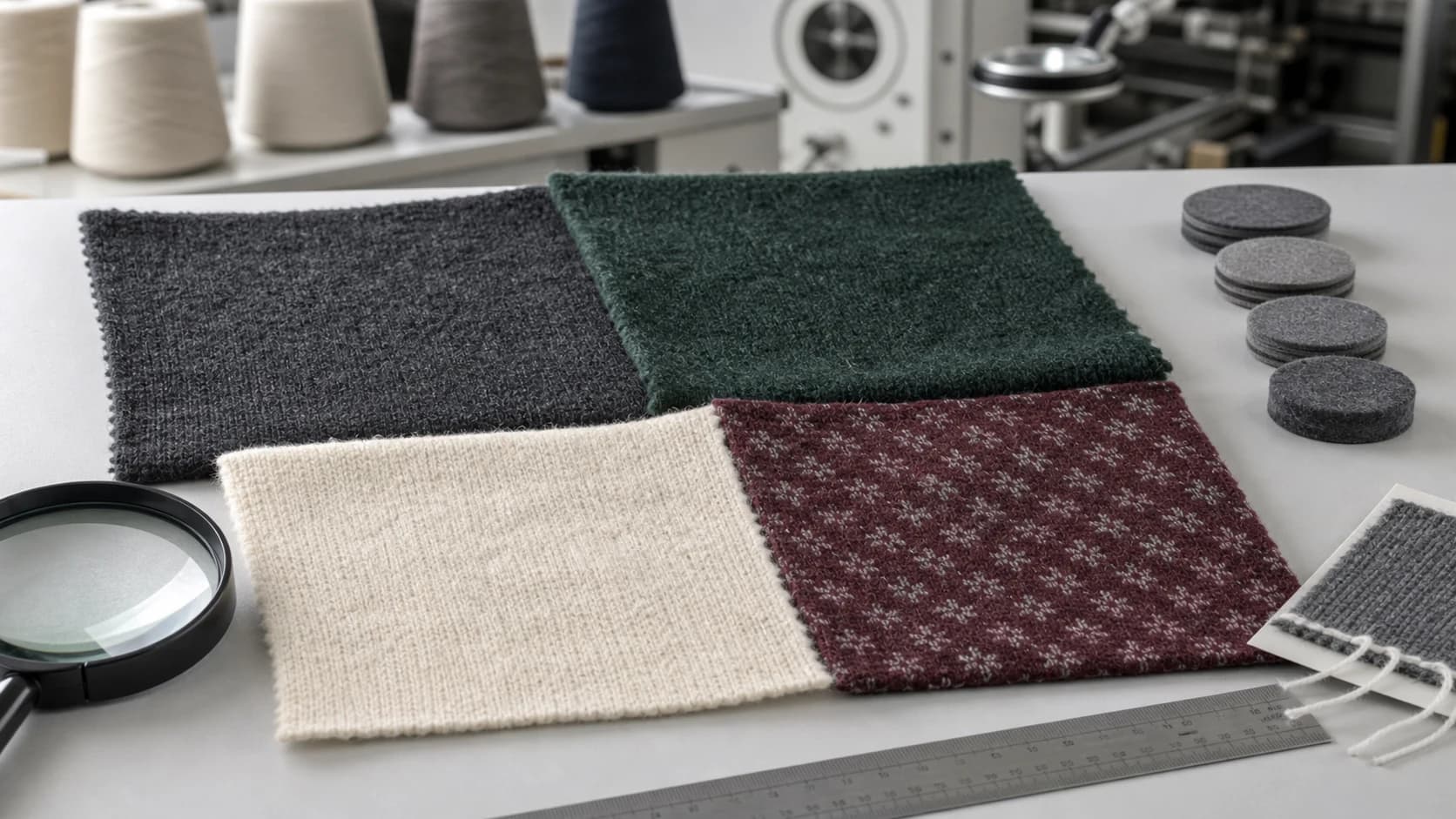
Wool may be one component in a multi-fibre construction designed around hand, structure, colour and cost. Ask for every fibre percentage and keep the article number attached to that declaration. Do not infer fibre content from a soft surface or a commercial name such as cashmere-feel.
The catalogue demonstrates the range. GD2672 contains 1.7% wool within a yarn-dyed air-layer blend and is recorded at 360 GSM and 160 cm. Acrylic-wool article 2552-240g contains 3.5% wool and is recorded at 240 GSM with a 170-175 cm width reference. They serve different sourcing briefs.
- Record the complete fibre breakdown and article number.
- State whether the priority is warmth, hand, structure, drape or appearance.
- Confirm whether the surface is brushed, raised, compact or otherwise finished.
- Match care and testing requirements to the destination market and garment label.
Use article data to compare weight and width
GSM helps describe material mass, while usable width affects consumption and pattern planning. Neither proves softness, warmth or quality alone. Compare the recorded values with a full-width or garment-relevant sample, then confirm the tolerances and method in the production specification.
The catalogue includes wool-related directions at different weights and widths. GD2672 is 360 GSM at 160 cm; 2552-240g is 240 GSM at 170-175 cm; GD2579 is a wool-blend jacquard at 240 GSM and 160-165 cm. The buyer should shortlist by garment need rather than by fibre label alone.
| Article | Recorded data | Review focus |
|---|---|---|
| GD2672 | 360 GSM; 160 cm; yarn-dyed wool-blend air-layer | Structure, colour construction, recovery and care |
| 2552-240g | 240 GSM; 170-175 cm; acrylic-wool blend | Hand, width yield, pilling and garment drape |
| GD2579 | 240 GSM; 160-165 cm; wool-blend jacquard | Pattern repeat, reverse, snagging and placement |
Test the surface and care route on the exact sample
Inspect pilling, abrasion, shedding, snagging and colour transfer where relevant. Compare the face and reverse before and after the intended laundering, pressing or dry-cleaning route. If the surface is brushed, record pile direction and appearance changes after rubbing or repeated care.
A garment trial reveals seam bulk, needle response, edge behaviour, lining needs, shrinkage and shape retention. Keep the tested sample, results and approval note together. A pass on one article or finish does not automatically transfer to another composition or colour.
- 01Photograph and label the original sample.
- 02Confirm composition, GSM and usable width against the data sheet.
- 03Run buyer-required pilling, colourfastness and dimensional checks.
- 04Sew the intended seam and complete a garment-relevant care trial.
- 05Approve a dated reference and state remaining production tests.
Separate sample approval from commercial confirmation
The RFQ should include garment, season, article or benchmark, composition direction, GSM, usable width, colour, finish, quantity, destination, testing and documentation. Ask the supplier to identify any substitute and explain the changed fields rather than presenting it as equivalent.
Sample approval confirms the reviewed material. Commercial confirmation establishes live availability, colour, quantity, price, MOQ, lead time, packing, payment and shipping for the order being discussed. Keeping those decisions separate makes the sourcing record clearer.
Article evidence snapshot
Use composition and article identity before judging softness
Three catalogue references show why wool-blend sourcing cannot stop at a tactile impression. GD2672, 2552-240g and GD2579 combine different structures, recorded widths and surface questions even though each contains wool. The article sheet establishes the comparison starting point; the labelled cutting, garment trial and current quotation establish what can be approved and supplied.
- GD2672: yarn-dyed air-layer structure
- Recorded at 360 GSM and 160 cm, this route needs checks for colour construction, recovery, surface consistency, pilling and the intended care process.
- 2552-240g: acrylic-wool blend
- Recorded at 240 GSM and 170-175 cm, it provides a different width-yield and drape direction. Confirm the exact composition and evaluate hand, pilling and garment behaviour.
- GD2579: wool-blend jacquard
- Recorded at 240 GSM and 160-165 cm, this article adds motif repeat, reverse appearance, snagging and placement decisions to the normal wool-blend sample review.
Evidence boundary
Article numbers, compositions, GSM values and width references come from the supplied 104-record finished-fabric catalogue. Colour, finish, live availability, sample terms, testing, packing, quantity, lead time, price and other commercial conditions require current confirmation for the specific inquiry.
Buyer questions
Frequently asked questions
Does wool blend fabric always feel warm?
No. Warmth depends on construction, weight, density, surface, air retention, lining and garment design as well as wool percentage. Approve the exact finished sample for the intended season.
Can buyers rely on the word cashmere-feel?
No. Cashmere-feel describes a surface impression, not fibre content. Ask for the full composition declaration and do not infer cashmere unless the documented article data states it.
What tests matter for brushed wool blends?
Common checks include pilling, abrasion, shedding, colourfastness, dimensional stability and appearance after the intended care route. The buyer should specify applicable methods and acceptance criteria.
Should width be quoted as full or usable width?
Use usable width for consumption planning and state the agreed measurement method. Confirm production tolerance on the exact finished article before final marker planning.
Move from category research to a sample brief
Share the garment use, construction direction, composition, target GSM, usable width, color, finish and tests that matter. The team can then confirm the appropriate article and quotation route.