Finished fabric buyer guide
What Is Cotton Jersey Fabric? A Buyer Guide
What is cotton jersey fabric?
The cotton in cotton jersey is the yarn. The structure is jersey, which is a common way of knitting. Cotton jersey is a single-knit structure, and it is also a common knit fabric. It is often used for T-shirts, underwear, swimwear and other soft, stretchy garments of this kind. Before asking for samples you can refer to the specification sheet, and start settling the sample from the few fairly basic items (garment, weight, usable width).
Updated 2026-11-20 · Reviewed by O'range Textile sourcing team
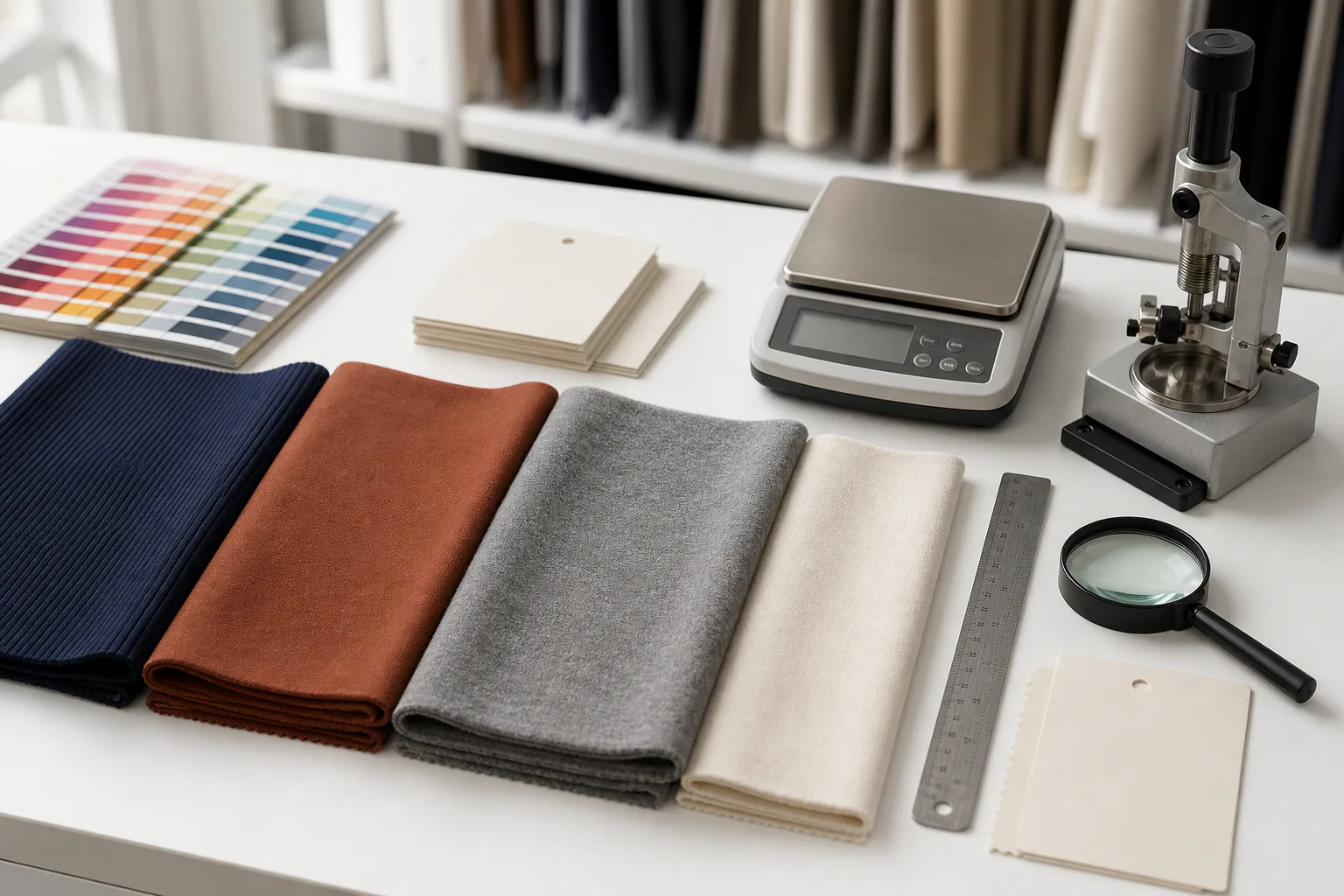
What is jersey fabric?
Jersey is the most common knit fabric today.
Spread the jersey out and look at the face: that is its distinctive V-shaped knit texture. Turn it over and look at the back, and there are horizontal purl loops; from comparing the face and the back you can see that the two sides are not the same.
After jersey is cut across the width it will curl at the edge, and the thread ends will also unravel along with it.
Cotton jersey fabric and cotton spandex jersey
Cotton jersey means cotton single knit. It is a fabric built by jersey — the single-knit way of knitting — and it is often used for T-shirts, underwear, swimwear and other soft, stretchy garments of this kind.
Cotton spandex jersey is a single-knit fabric of cotton plus spandex; spandex has been added to the base fiber of cotton. It raises the fabric's stretch and its ability to spring back and recover, which makes it more practical for fitted T-shirts, childrenswear, loungewear and other garments with a lot of movement.
And the single-knit structure of cotton spandex jersey will not turn into interlock because spandex has been added.
Cotton jersey vs interlock, rib and French terry
First, the difference between jersey and double-knit fabric: double-knit fabric joins two layers of structure together, and a structure like this is more stable than jersey and does not curl easily. But it is heavier in weight, uses more yarn, and the cost is also higher.
Compared with interlock: interlock is knitted from two pieces of 1×1 rib interlooped with each other, the face and the back look the same from the outside, and the structure is stable and does not curl. Compared with jersey, interlock is more stable. Interlock knitted from combed cotton yarn can also be very soft, and it is used for dresses, baby clothes and close-fitting turtlenecks.
Rib, like interlock, looks the same on the face and the back. Only its crosswise extensibility is better than that of jersey, twice that of jersey, and a rib that is knitted fairly well does not curl.
It is used for dresses, sweaters, and for necklines, cuffs and waistbands.
French terry is different from the two above: it is a knit fabric that is smooth on the face and has loops on the back.
It is suitable for sweatshirts, hoodies, joggers and garments of this kind.
What cotton jersey fabric is used for
Cotton jersey is commonly used for T-shirts, underwear, swimwear and other garments of this kind worn next to the body.
Fabric with spandex added has better stretch and also recovers better after being stretched, and it is used for fitted T-shirts, childrenswear, loungewear and other garments with a lot of movement.
What to state when asking for cotton jersey samples
When asking for samples, write the basic information and the requirements of the fabric clearly, which makes it easier for us to provide an accurate sample. Next, write down the knit of the fabric, state the composition, and choose whether there is a need to add spandex in addition. Also mark the weight, the width and the stretch direction, and put forward the face and back standard you need.
Then write the color requirement.
Note the use of the sample, the destination of the garments, and the corresponding test standards. At the same time state the specification of the sample: for example, the size of the sample and the number of pieces. Also write the use clearly, such as childrenswear or T-shirts, so that we can match a suitable quality. Finally, add a note on when the sample is due, how it is to be sent, and the supply situation. The commercial terms have to be confirmed in the current quotation, and cannot be assumed from the category page alone. After receiving the sample, check the hand feel, the shrinkage and the curling.
You cannot look at the composition alone; composition cannot tell you the performance, and specifically you have to look at the article and at the knit, the finishing and the test requirements of the finished sample.
What to check on a cotton jersey sample
Look at the fabric itself: cut the swatch you received and see whether it is the way jersey is described above, and also see whether the degree of curling and the degree of unravelling meet the requirements.
Then pull the fabric crosswise and lengthwise, try it several times, and see whether it matches the description or not.
Then look at the testing: for example whether the size changes after washing (AATCC TM135), whether it skews after washing (AATCC TM179), whether the colorfastness to washing is good (AATCC TM61), whether the color comes off in colorfastness to rubbing (AATCC TM8), and whether it pills (ASTM D4970). The page of that pilling method notes that it is not recommended for acceptance testing, and which test method to use is agreed between buyer and seller.
Summary:
Cotton jersey is a cotton single-knit fabric, suitable for T-shirts, underwear and swimwear, and spandex can be added.
Before asking for samples, settle the basic fabric information, the knit and the requirements.
Sources
- Cotton Incorporated, CottonWorks, "Single & Double Knits" (checked 20 November 2026), https://cottonworks.com/learning-hub/knitting/single-and-double-knits/
- AATCC TM135, dimensional change after laundering, https://members.aatcc.org/store/tm135/543/
- AATCC TM179, skew after laundering, https://members.aatcc.org/store/tm179/577/
- AATCC TM61, colorfastness to laundering, https://members.aatcc.org/store/tm61/495/
- AATCC TM8, colorfastness to rubbing, https://members.aatcc.org/store/tm8/481/
- ASTM D4970, pilling, https://store.astm.org/d4970_d4970m-22r26.html
About O'range Textile:
O'range Textile is the export business of a knitting manufacturer located in Keqiao, Shaoxing. The catalogue does not assign a specific article to this category; you can ask for samples with a reference sample or a specification sheet, and the specifics are confirmed in the current quotation.
Buyer questions
Frequently asked questions
Is jersey always made of cotton?
No. Jersey is a way of knitting; the yarn it is knitted from is not only cotton, and other yarns can also be chosen.
Why does cotton jersey curl at the edges?
After jersey is cut across the width it will curl at the edge, and the thread ends will also unravel along with it. Double-knit fabric is more stable than jersey and does not curl easily.
What is the difference between jersey and interlock?
Single-knit fabric is different on the face and the back, light and soft in texture, and the cut edge curls easily. Double-knit fabric, on the other hand, looks the same on the face and the back, and is more stable than jersey.
Move from category research to a sample brief
Share the garment use, construction direction, composition, target GSM, usable width, color, finish and tests that matter. The team can then confirm the appropriate article and quotation route.