Hoodie fabric sourcing guide
French Terry Fabric for Hoodies: Sourcing Decisions
French terry fabric for hoodies should be selected from the hoodie brief, not from a generic weight label. Buyers need to align loop structure, face, GSM, usable width, stretch, recovery, shrinkage and finishing with the season, silhouette, trims and care route, then approve the result on a labelled finished sample.
Updated 2026-07-28 · Reviewed by O'range Textile sourcing team
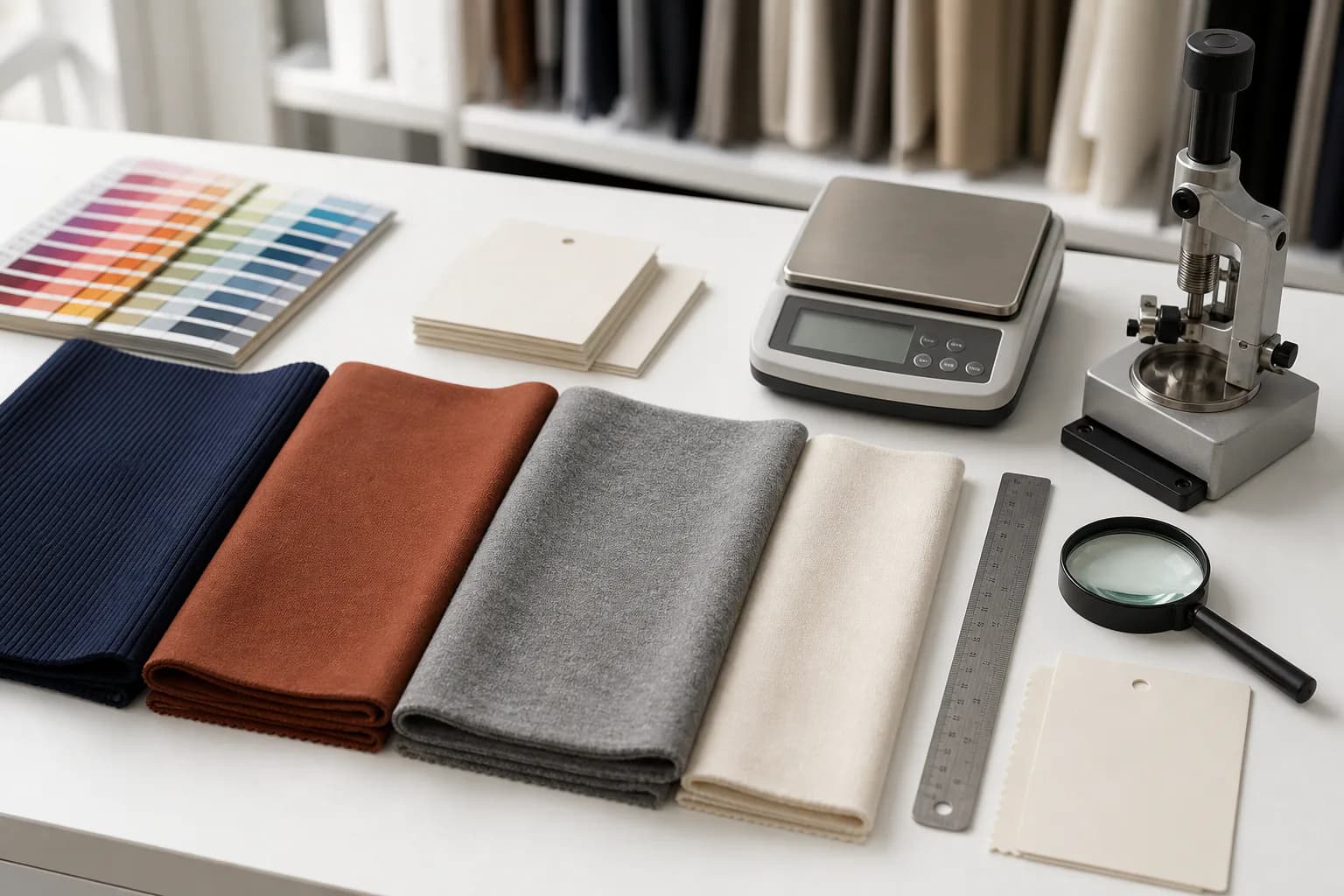
Define the hoodie before choosing the fabric
Begin with season, market, fit and layering. A cropped fashion hoodie, a relaxed streetwear hoodie and a training layer may use different body, drape and recovery even when all are described as French terry. State whether the hood is single or double layer, whether the garment has a kangaroo pocket, and whether the body needs to hold a boxy shape or fall more softly.
Record every process that can change the material. Screen printing, digital printing, embroidery, heat transfer, garment dyeing, washing and enzyme treatments can affect surface, shade, shrinkage and hand. Rib cuffs and waistbands need compatible recovery and colour, while drawcord channels, pocket edges and shoulder seams need enough stability.
- Hoodie silhouette, size range and intended layering
- Season, destination climate and target consumer
- Single- or double-layer hood and pocket construction
- Rib, binding, zipper, drawcord and other trim requirements
- Printing, embroidery, garment wash and care instructions
Select GSM, width and stretch as a connected system
GSM describes mass per square metre, but the hoodie result also depends on yarn, loop density, finish and pattern. A heavier number can add body, yet it may also increase seam bulk, drying time and hood weight. A lighter fabric may drape well but need more attention to opacity, pocket stability and growth. Ask for an acceptable target range and compare garment-relevant samples.
Usable width affects marker planning and consumption. Confirm it after the agreed finishing and relaxation state. Check stretch and recovery in the directions that matter to dressing, movement, cuffs and hems. If the programme needs a stable boxy shape, uncontrolled growth can be as important as insufficient stretch.
| Hoodie decision | What to specify | What to verify |
|---|---|---|
| Body and drape | Target GSM range, loop density and finish | Panel hang, hood weight and seam bulk |
| Consumption | Usable width and tolerance | Finished relaxed width and marker assumptions |
| Movement | Stretch direction and recovery target | Growth at elbows, hem, pocket and shoulders |
| Care | Wash route and shrinkage tolerance | Dimensional and surface result after laundering |
Inspect a sample large enough for hoodie decisions
A small swatch can show colour and hand, but it may not reveal hood drape, loop consistency, seam bulk or dimensional behaviour. Request enough material for the critical pattern areas or a development garment. Label the sample with supplier, article, colour, finish, date and version so later revisions do not replace the approved reference silently.
Measure GSM and usable width after conditioning. Photograph face and reverse. Run shrinkage, spirality, pilling, colourfastness and stretch or recovery checks according to the buyer's needs. Sew the shoulder, hood seam, pocket edge and body-to-rib junction. If the garment is printed, embroidered or washed, include that process in the trial.
- 01Match the sample to the hoodie specification and article record.
- 02Condition and measure the finished fabric.
- 03Inspect face, loops, shade, usable width and dimensional behaviour.
- 04Sew and process the critical garment areas.
- 05Approve one dated sample with recorded test and fit observations.
Send a hoodie RFQ that sales can answer precisely
Include the hoodie tech pack or reference, construction direction, composition, target GSM, usable width, face, reverse, colour, finish, stretch, recovery, shrinkage, pilling and colourfastness requirements. Add size range, quantity, colour split, destination, testing, inspection, packing and documentation needs.
Ask the supplier to identify the proposed article and any variation from the brief. Sample availability, current colour and quantity, MOQ, lead time, price, payment, packing and shipping basis need a current response. This keeps the public guide useful without implying that one material, colour or delivery term is always available.
Article evidence snapshot
Turn a hoodie concept into measurable fabric decisions
A useful hoodie brief connects the garment silhouette and season to a finished fabric specification. It states the required reverse, composition direction, target body, usable width, recovery, shrinkage, colour and finish, then tests the critical hood, pocket, hem and seam areas. The approved sample records the material decision; the current quotation records availability and commercial conditions.
- Garment evidence
- Provide the hoodie drawing or reference garment, intended fit, hood construction, pocket type, rib plan, print or embroidery process, garment wash and destination market.
- Fabric evidence
- Record article, face, reverse, composition, GSM, usable width, stretch, recovery, shrinkage, surface finish and the test methods used on the exact finished sample.
- Commercial evidence
- Confirm colour, sample route, live quantity, MOQ, lead time, price, packing, documentation and shipping for the current order instead of treating guide copy as a supply promise.
Evidence boundary
This guide explains how to specify and approve French terry for hoodies. Exact construction, composition, GSM, usable width, colour, finish, testing, live availability, sample terms, quantity, MOQ, lead time, price, packing and shipping require current confirmation for the selected article and inquiry.
Buyer questions
Frequently asked questions
What GSM French terry is suitable for hoodies?
There is no universal GSM. Select a target range from season, fit, layering, hood construction, drape and processing, then approve the body and seam result on the exact finished sample.
Should French terry for hoodies stretch?
The required stretch depends on fit and dressing. Buyers should define direction, extension and recovery, then check growth at the elbows, hem, shoulders and pocket after wear and care trials.
How much fabric should a hoodie sample use?
Request enough fabric to evaluate the hood, shoulder, pocket, hem and body-to-rib junction, or make a full development garment. A small swatch cannot validate these decisions.
When are hoodie fabric MOQ and lead time confirmed?
They are confirmed for the current article, colour, finish, quantity and destination in the supplier's current quotation. They should not be inferred from a general sourcing guide.
Move from category research to a sample brief
Share the garment use, construction direction, composition, target GSM, usable width, color, finish and tests that matter. The team can then confirm the appropriate article and quotation route.