Heavyweight fabric specification guide
Heavyweight French Terry Fabric for Hoodie Programs
Heavyweight French terry fabric is a sourcing direction, not a universal GSM threshold. More mass can add body, but warmth, softness, drape and durability also depend on yarn, loop structure, density, finishing and garment construction. Buyers should define the required result and approve one finished sample instead of treating heavier as automatically better.
Updated 2026-07-28 · Reviewed by O'range Textile sourcing team
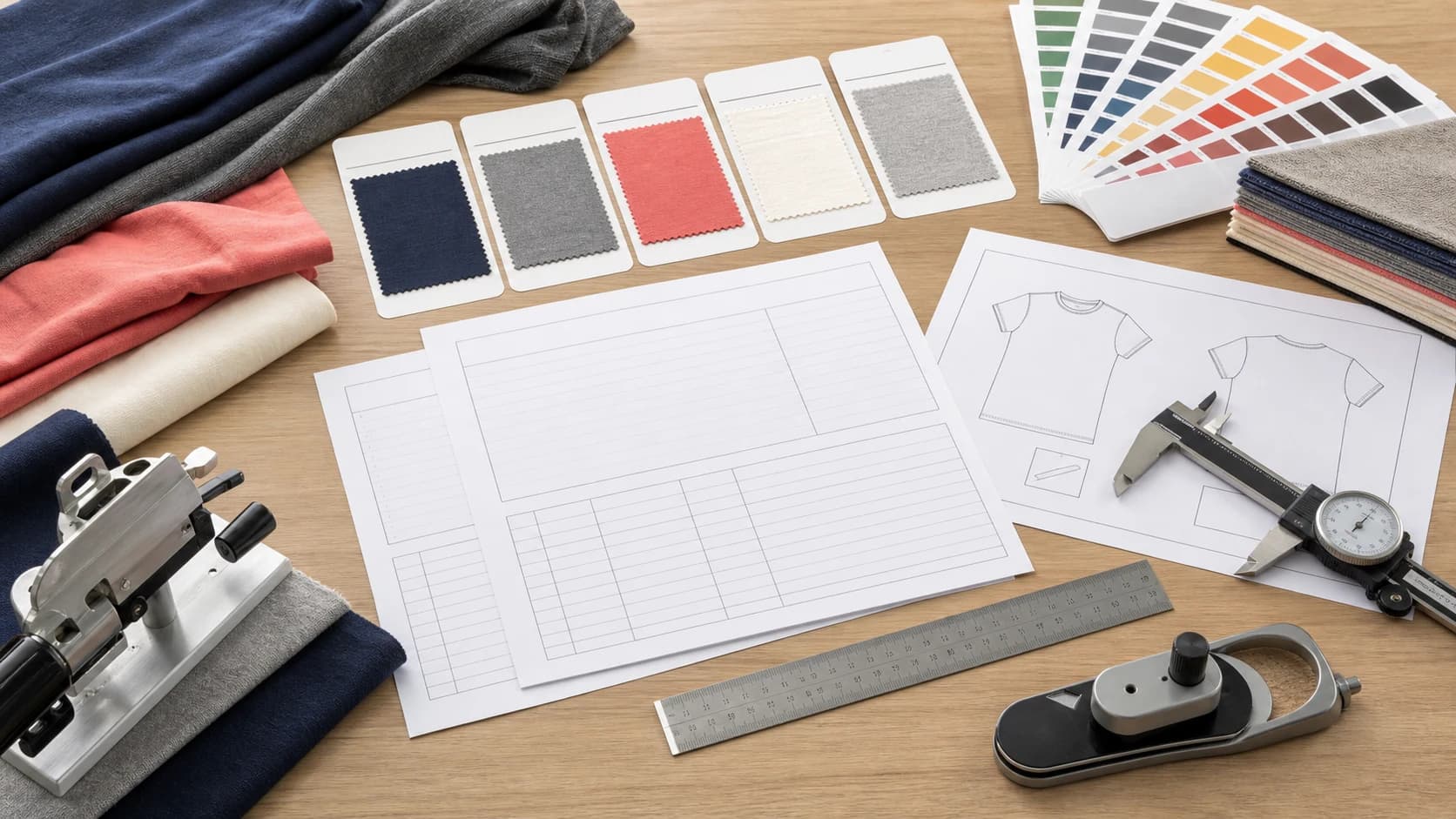
Agree what heavyweight means for the programme
The word heavyweight has no single global threshold. A buyer, mill and retailer may use different ranges, and the same GSM can feel different when yarn, density, loop size or finish changes. State the target GSM range and the garment result: structured or relaxed body, loop profile, expected warmth, layering, drape and care.
Include the destination climate and garment construction. A double-layer hood, large pocket, oversized fit or dense rib trim adds mass to the garment. A fabric that feels substantial as a flat sample may become too heavy at seam intersections or too slow to dry after washing. The brief should explain where body is valuable and where flexibility is required.
- Target GSM range and accepted tolerance
- Loop size, density, face and reverse appearance
- Required body, drape, warmth and layering
- Hood, pocket, seam and rib construction
- Care, printing, embroidery and garment-wash processes
Read GSM with density, width and finishing
Two French terry samples at a similar GSM can have different thickness, compactness and hand. A denser construction may feel firm and stable; a larger loop or bulkier yarn may feel loftier. Compacting can improve dimensional control but change width and hand. Raising or brushing the reverse moves the product towards a fleece-like surface and adds separate pilling and shedding questions.
Measure usable width after the agreed finishing and relaxation. Width affects marker efficiency and total consumption, while the heavier material affects roll handling and freight. Confirm stretch and recovery because weight does not prevent growth. Review whether the fabric returns after extension and whether elbows, pockets or hems distort during wear.
| Specification field | Why it matters | Approval evidence |
|---|---|---|
| GSM | Describes mass and supports comparison | Conditioned measurement with tolerance |
| Usable width | Changes marker efficiency and consumption | Finished relaxed cuttable width |
| Loop and density | Influence body, thickness and reverse appearance | Face-and-reverse sample inspection |
| Stretch and recovery | Affect fit and growth despite higher weight | Agreed test plus garment trial |
| Shrinkage and care | Can change size, width, hand and surface | Measured result after intended care |
Test bulk, seams and care before approval
Condition and label the finished sample before testing. Measure GSM, usable width and dimensional change by the agreed methods. Inspect loop consistency, face, shade and any raising. Run pilling, colourfastness and shrinkage tests that match the buyer's market and care label. If the garment will be printed, embroidered or garment washed, reproduce that treatment on the development material.
Sew the thickest intersections, including hood seams, pocket corners, shoulder seams and body-to-rib joins. Check skipped stitches, seam grin, press marks, edge bulk and feed balance. Make a garment or panel large enough to assess hang and recovery. Reinspect after care and record what changed.
- 01Label and condition the exact finished sample.
- 02Measure GSM, usable width and relevant physical fields.
- 03Run shrinkage, pilling, colourfastness and surface checks.
- 04Sew critical bulky intersections and process the garment trial.
- 05Approve the dated sample and list unresolved production conditions.
Keep the heavyweight RFQ measurable
State garment, season, fit, target GSM, usable width, composition, face, loop back, colour, finish, stretch, recovery, shrinkage, pilling, colourfastness and care. Add quantity, colour split, destination, packing, testing, inspection and documentation. Attach the approved sample identity and reference images under consistent light.
Ask the supplier to confirm any change from the brief. Current availability, sample timing, MOQ, lead time, price, payment, packing and shipping basis must be confirmed for the specific article, colour and order. A guide can explain how to evaluate heavyweight French terry, but it cannot replace a current commercial offer.
Article evidence snapshot
Define heavyweight through garment performance and a recorded sample
A buyer can use GSM to shortlist heavier French terry directions, but the specification must also record face, loop back, usable width, density, stretch, recovery, shrinkage and care. A hoodie panel and wash trial reveal seam bulk, hood weight, growth and surface change that a number cannot predict. The approval record identifies the material; the quotation confirms current commercial terms.
- Mass is one variable
- GSM supports comparison and consumption planning, but it does not independently prove insulation, quality, softness, compactness or the correct body for a garment.
- Construction creates the result
- Yarn size, loop length, density, face and reverse, compacting, raising and other finishing choices influence thickness, trapped air, drape, shrinkage and seam behaviour.
- The garment validates the choice
- Test the hood, pocket, shoulder, hem and rib junction after the intended care process, then approve one labelled article, colour, finish, date and version.
Evidence boundary
This guide explains heavyweight French terry specification and approval. Exact construction, composition, GSM, usable width, colour, finish, testing, live availability, sample terms, quantity, MOQ, lead time, price, packing and shipping require current confirmation for the selected article and inquiry.
Buyer questions
Frequently asked questions
What GSM counts as heavyweight French terry?
There is no universal threshold. Buyers should agree a target range with the supplier and evaluate construction, usable width, body, seams, care and garment result on the exact finished sample.
Is heavier French terry always warmer?
No. Warmth also depends on density, yarn, loops, trapped air, finish, fit and layering. A brushed reverse may feel warmer than a compact loop back at a similar mass.
Does heavyweight French terry need stretch testing?
Yes when fit, movement or growth matters. Check extension and recovery in the relevant directions and review elbows, pockets, hems and shoulders during a garment trial.
Can the website confirm heavyweight fabric availability?
The website explains sourcing and approval. Live article, colour, finish, quantity, sample route, MOQ, lead time and price require confirmation for the current inquiry.
Move from category research to a sample brief
Share the garment use, construction direction, composition, target GSM, usable width, color, finish and tests that matter. The team can then confirm the appropriate article and quotation route.